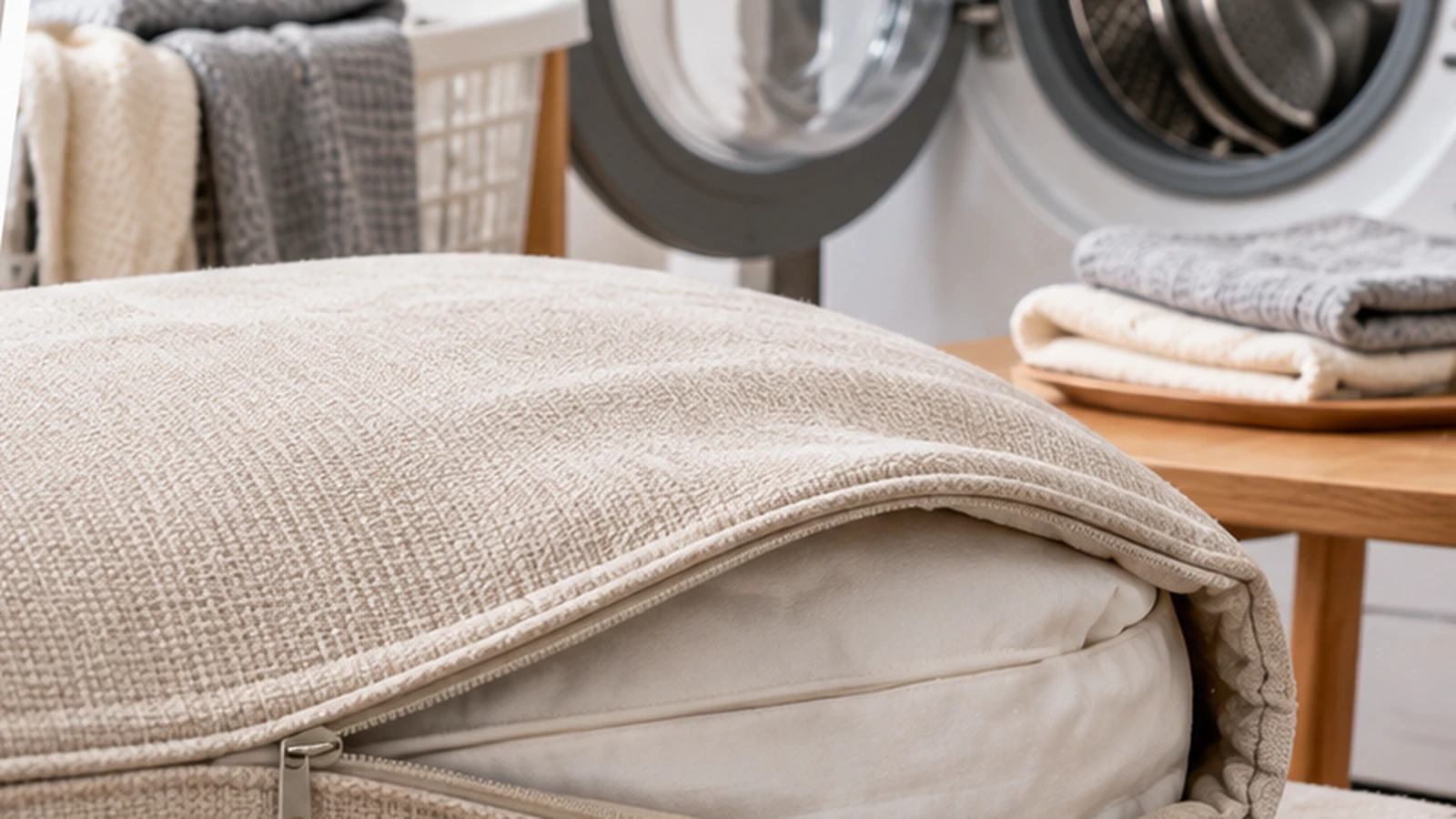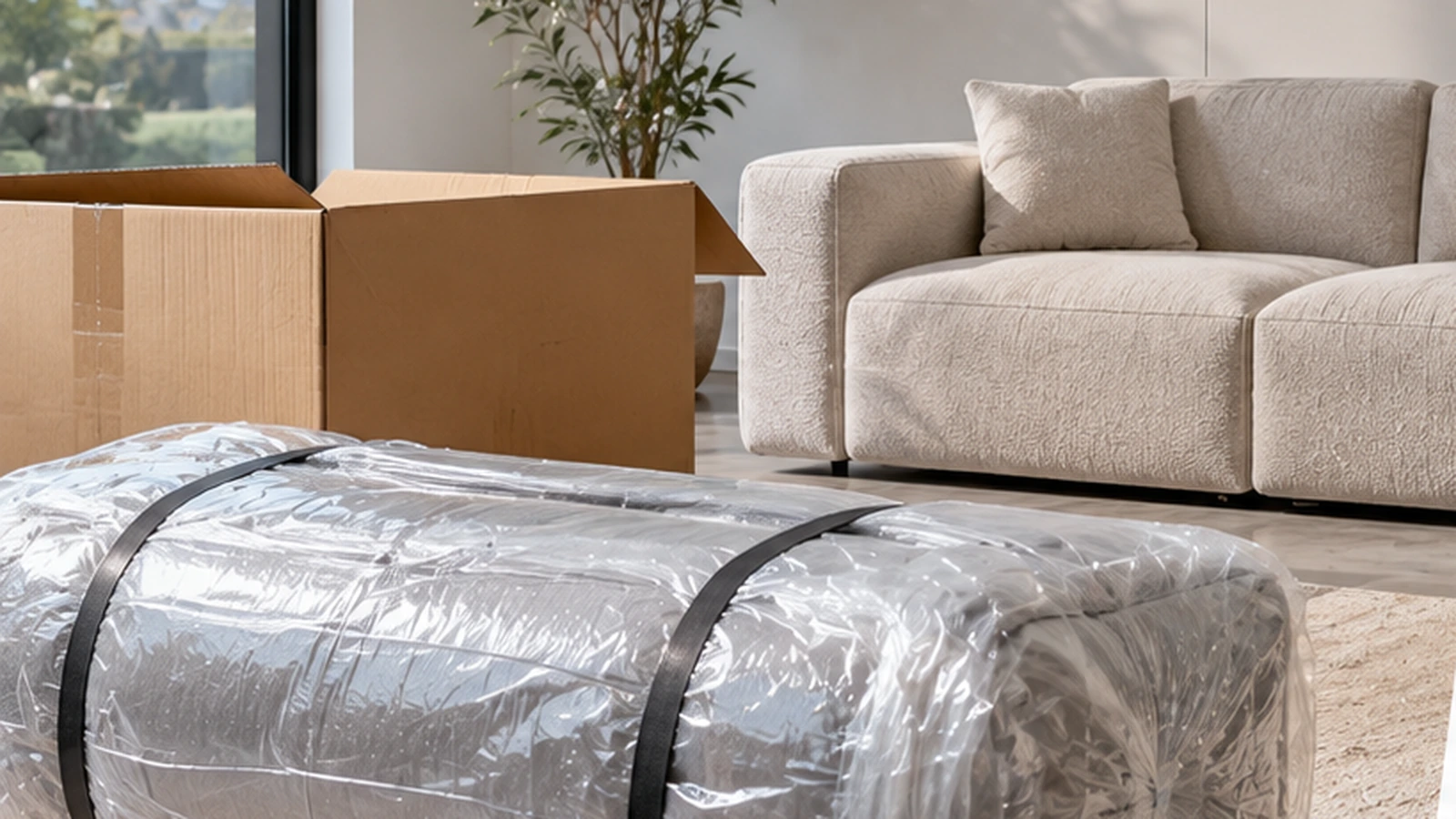
A vacuum-compressed sofa is upholstered furniture packed in a reduced-volume state for transport and delivery, then opened and arranged into its intended furniture form at the destination. The most important buyer distinction is that the packed dimensions and the usable sofa dimensions are not the same. After unpacking, the product may need to be unfolded, positioned, connected by modules or allowed to return toward its intended upholstered shape according to the supplied instructions. For Scrape Furniture buyers, the useful question is therefore not only “what is a vacuum compressed sofa?” but also what changes between shipping, unpacking, room placement and final inspection.
What Is Actually Different About a Vacuum-Compressed Sofa?
The term what is a vacuum compressed sofa usually starts as a product-definition search, but the commercial meaning is mainly logistical. A conventional sofa is often transported close to its finished furniture volume. A compressed sofa is prepared so the shipping package occupies less space than the finished sofa or module.
Scrape Furniture’s published product data repeatedly describes vacuum compression as a way to reduce package volume and shipping cost. The company’s range includes modular sectionals, sofa beds, single-seat lounge sofas and other upholstered furniture supplied in compressed formats. This makes packing configuration part of the furniture specification rather than a separate warehouse detail.
Important boundary: “vacuum compressed” does not by itself prove one universal internal construction, recovery time or unpacking procedure. Scrape Furniture product pages show different combinations of soft fabric, faux leather, foam and pocket springs. Buyers should use the instructions and specifications for the exact model being ordered.
Packing Size and Opened Sofa Size Are Two Different Specifications
A buyer comparing a vacuum compressed sofa packing size with the finished product size should treat both as required procurement data. The finished size determines room fit and furniture layout. Packing size determines storage, loading, delivery access and handling.
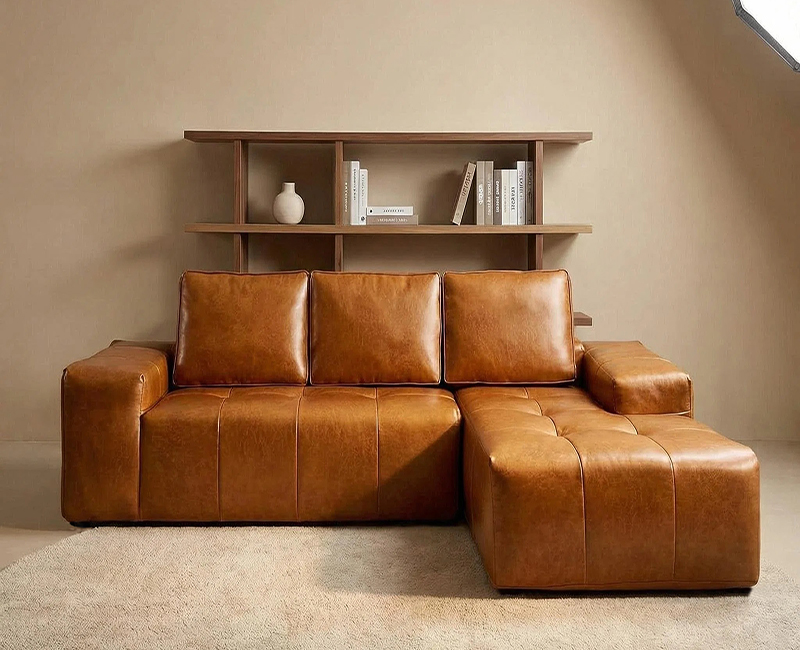
For example, Scrape Furniture’s published Brown Faux Leather Modular L Sectional Sofa lists a whole-set size of 275 × 275 × 70 cm, while each module is packed at 100 × 35 × 35 cm. A separate vacuum-packed low-profile fabric lounge sofa lists a 2-seat finished size of 130 × 90 × 65 cm and a packing size of 143 × 27 × 27 cm; the 3-seat version is listed at 174 × 90 × 65 cm with a packing size of 183 × 28 × 28 cm.
These examples illustrate why a product page should not be read from only one dimension set. A retailer may need the finished dimensions for merchandising, while a distributor needs packing dimensions for warehouse slots and delivery planning.
Why Vacuum Packing Matters for Furniture Logistics
A vacuum packed sofa for shipping can change the logistics discussion because the sofa reaches the buyer in a smaller package than its final in-room footprint. That can influence container planning, warehouse handling and last-mile delivery.
For B2B buyers, the useful logistics questions include:
- How many packages make up one finished sofa?
- What are the dimensions and weight of each package?
- Is the model supplied as one compressed unit or several modules?
- Which pieces must be assembled or positioned after opening?
- What delivery access is required before the product is opened?
This is more actionable than simply describing a product as a compressed sofa for easy delivery. The buyer needs the package count and dimensions for the actual model.
What Happens After Unpacking a Vacuum-Compressed Sofa?
After opening, the sofa moves from a transport configuration to its furniture configuration. Depending on the model, this can involve removing the external packaging, unfolding or repositioning upholstered sections, arranging back cushions, aligning modules and checking the final layout.
A search for vacuum compressed sofa after unpacking often leads to questions about how quickly the sofa will look like the product image. The client data supplied for Scrape Furniture does not provide one universal recovery-time claim, so buyers should not be given a fixed number of hours as if it applied to every model.
The better rule is to follow the model-specific unpacking instructions and inspect the sofa after it has been opened and positioned as intended. If a project requires a defined acceptance window after unpacking, that requirement should be confirmed with the supplier before bulk ordering.
How to Unpack a Vacuum-Compressed Sofa Without Turning the Process Into Guesswork
For how to unpack a vacuum compressed sofa, the buyer should begin with the supplier’s instructions rather than a generic online method. Packaging structure, module count and upholstery construction vary by product.
A practical receiving sequence is:
- Match package labels or order references to the ordered sofa/model.
- Check the package for visible transport damage before opening.
- Move the package to a suitable opening area before removing compression packaging.
- Open packaging carefully to avoid cutting upholstery or internal components.
- Identify all modules, cushions and supplied parts before arranging the sofa.
- Position the sofa according to the approved configuration.
- Inspect dimensions, upholstery condition, seams, modules and visible shape against the agreed product reference.
The sequence is intentionally general. Exact cutting points, tools, waiting times or assembly steps should come from the specific product instructions.
Foam, Springs and Upholstery Should Be Confirmed by Model
Scrape Furniture’s product catalog contains models using high-density foam, independent pocket springs, soft fabric and faux leather. These are real product features, but they should not be generalized to every vacuum compressed modular sofa.
For example, the Brown Faux Leather Modular L Sectional Sofa is described with pocket springs and high-density foam, while other compressed lounge sofas are described primarily around soft padded or quilted structures. A buyer should therefore request the construction information for the exact model rather than assuming that all compressed sofas share the same internal support system.
This matters after unpacking because the final feel, shape and module behavior depend on the construction actually supplied.
Modular Sofas Need a Layout Check After Opening
With modular compressed furniture, unpacking is only part of the receiving process. The buyer also needs to confirm that the module count and layout match the approved configuration.
For an L-shaped sectional, the inspection may include:
- number of seat modules;
- chaise or extended-seat position;
- back cushions and arm sections;
- overall opened footprint;
- module alignment;
- upholstery color and surface condition.
This is especially important for importers and private-label buyers because a module-level packing plan can look very different from the final product image. The room-planning dimensions belong in the sales specification; the pack dimensions belong in the logistics specification.
What Should Buyers Inspect After the Sofa Is Opened?
| Inspection Item | What to Compare | Why It Matters |
|---|---|---|
| Package count | Shipping documents vs received packages | Confirms all modules arrived. |
| Finished configuration | Approved product/module layout | Prevents incorrect assembly or merchandising. |
| Opened dimensions | Order specification / product reference | Confirms room and retail-display fit. |
| Upholstery | Color, fabric/faux leather and visible surface condition | Identifies transport or opening damage. |
| Cushions/modules | Quantity, position and visible shape | Confirms the complete furniture configuration. |
| Seams and edges | Visible stitching and contact areas | Helps identify opening or handling damage. |
| Packaging record | Packing size, weight and module count | Supports future shipment and warehouse planning. |
Why Importers Should Request Both Product and Packing Data
A vacuum compressed sofa manufacturer inquiry should not stop at upholstery color and finished dimensions. Importers, distributors and private-label programs need a data set that supports both furniture selection and logistics planning.
A useful RFQ should ask for:
- finished product dimensions;
- module dimensions where applicable;
- packing dimensions for each package;
- package count per finished sofa;
- package and product weight where published or confirmed;
- upholstery and internal construction of the selected model;
- unpacking and assembly/positioning instructions;
- order-specific labeling and packing confirmation if required.
Scrape Furniture’s furniture collection includes multiple vacuum-compressed sofa formats. Buyers comparing modular compressed furniture can also review the verified Brown Faux Leather Modular L Sectional Sofa, which publishes both finished and module packing dimensions.
A Vacuum-Compressed Sofa Is Both a Furniture Product and a Logistics Configuration
The strongest answer to “what is a vacuum compressed sofa?” is not just a definition of compression. It is a sofa whose transport state and usable furniture state must both be understood.
For Scrape Furniture’s B2B buyers, the decision path is straightforward: confirm the finished sofa, confirm how it is divided and packed, define how it will be opened and arranged, and agree how the product will be inspected after unpacking. Project-specific packing and furniture requirements can be sent through the Scrape Furniture contact page.