Furniture Insights
News
What Is a Vacuum-Compressed Sofa? A Buyer's Guide
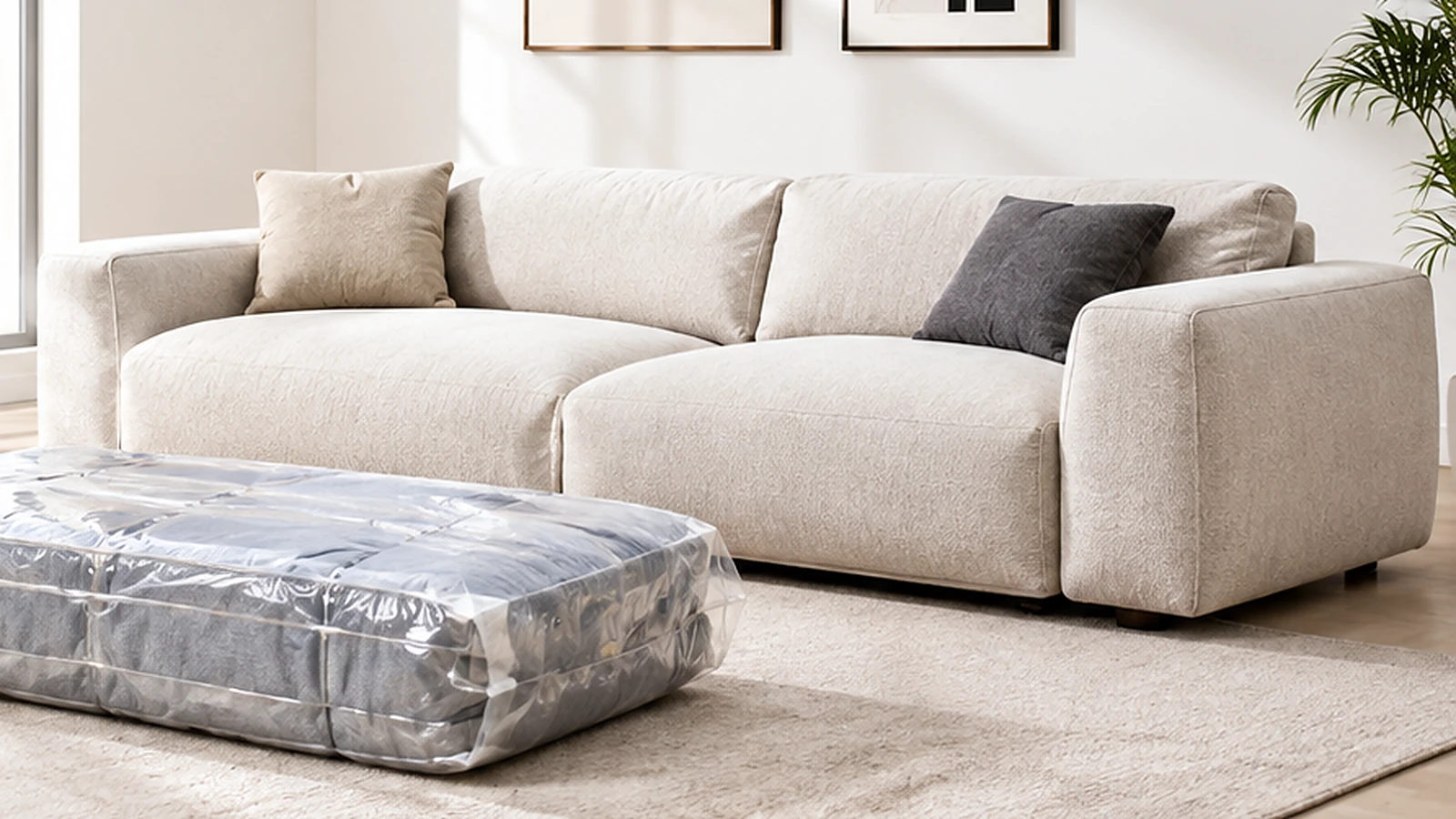
A vacuum-compressed sofa is upholstered seating whose compressible body or individual modules are reduced in volume and sealed for transport. After the packaging is opened, the resilient materials recover toward their intended shape, and the pieces are arranged according to the model’s instructions. It is not an inflatable sofa, and compression does not mean every design has the same foam, springs or assembly requirements. For furniture buyers, the important distinction is between the product received in its compact shipping state and the full-size sofa used in a room. Evaluate both: the package must suit the delivery plan, and the recovered furniture must meet the agreed seating specification.
How Does Vacuum Compression Work?
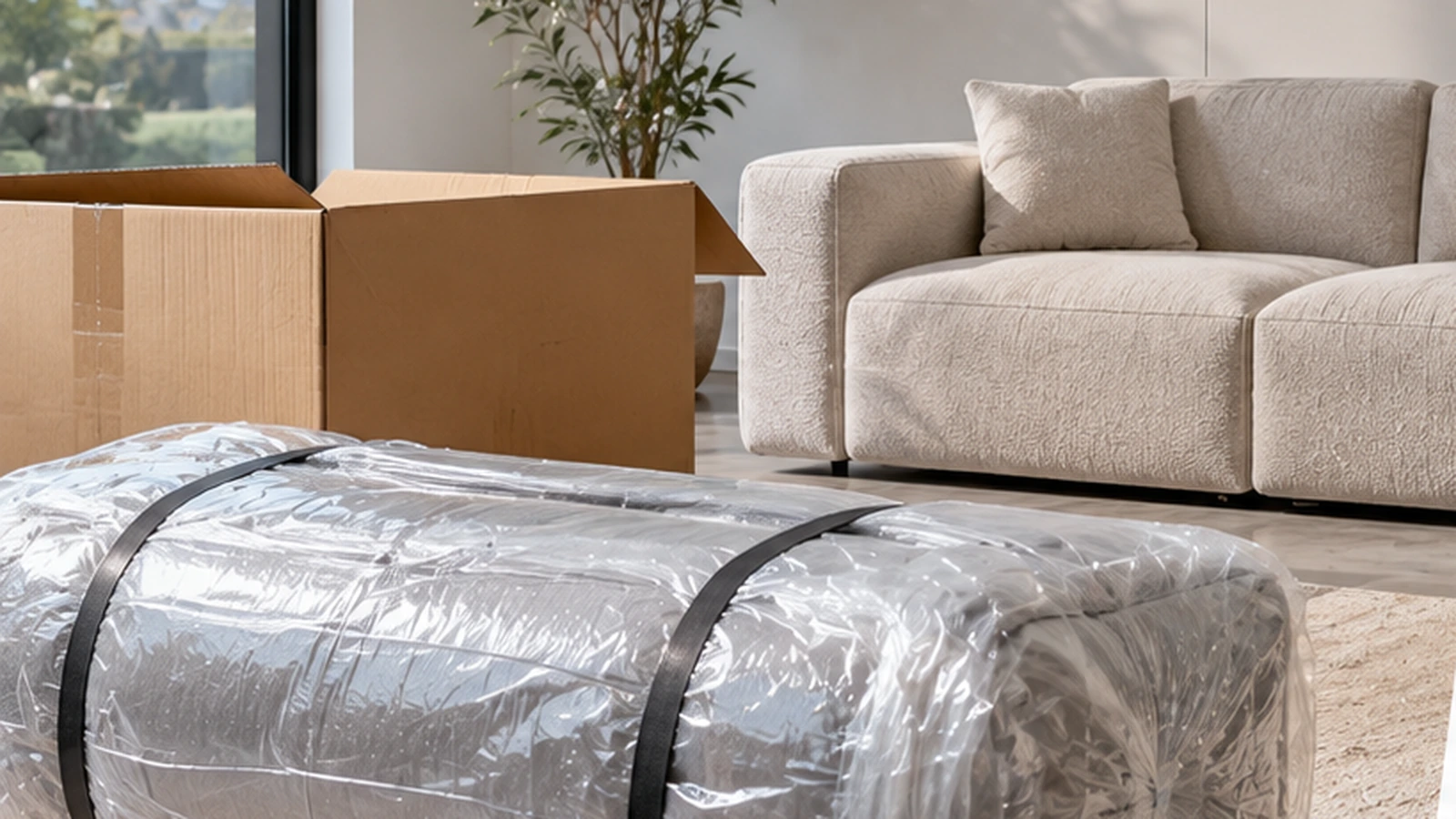
Compression packaging reduces the space occupied by materials designed to deform and recover. In a typical process, a suitable upholstered unit is placed in protective packaging, compressed with packing equipment, and sealed with air removed. The compressed shape is retained for handling and transport. Some designs are folded or rolled as part of that process; others are packed as separate modules.
Opening the sealed packaging releases the restraint. The flexible material can expand again, although the first visible expansion is not necessarily the point at which the sofa has reached its intended dimensions and seating feel. Recovery and any assembly or positioning are separate parts of preparing the furniture for use.
This is different from inflatable furniture. An inflatable sofa depends on an air chamber being filled and maintained. A vacuum-compressed upholstered sofa relies on its furniture construction for support after opening; the vacuum is a packing condition, not the support system used while sitting.
The practical limitation is design compatibility. A conventional rigid sofa cannot simply be treated as compressible because its cushions contain foam. The construction, upholstery, connections and packaging must work together. The label describes an intended shipping method, not permission to vacuum-pack any sofa at home.
Compressed, Modular and Flat-Packed Describe Different Things
These terms answer different questions. Compression concerns the shipping state, modularity concerns the arrangement of seating units, and flat packing concerns how components are separated for delivery. A sofa can combine more than one of these characteristics. When reviewing the compressed sofa and upholstered furniture collection, read these labels as complementary descriptions rather than competing categories.
| Description | What it tells you | What it does not establish |
|---|---|---|
| Vacuum-compressed sofa | Suitable upholstered components are packed in a reduced-volume state. | A universal support structure, recovery time or package count. |
| Modular sectional sofa | Separate seating units form the selected layout. | Whether those modules are compressed, rigid or supplied with connectors. |
| Flat-packed or knock-down sofa | Components are separated to make a more compact delivery format. | Whether any upholstered part is vacuum-compressed. |
| Sofa in a box | The furniture is delivered in one or more boxes. | Its internal construction or the work needed after opening. |
For purchasing, separate the layout drawing from the packing list. A photograph showing a corner sofa does not identify how many packages will arrive, which back cushions are separate, or how the sections are joined. Those details belong to the selected configuration, not to the category name.
Can a Vacuum-Compressed Sectional Sofa Contain Springs?
Yes, where the particular design is made for that combination. The brown faux leather modular L-sectional sofa in this collection is described with pocket springs, high-density foam and vacuum-compressed delivery. That is a model-specific example, not evidence that every compressed sofa contains springs.
Equally, a foam-based lounge design should not be described as a conventional framed sofa without construction evidence. Compare the specified support layers and finished sample. Neither “all foam” nor “contains springs” is, by itself, a complete quality assessment.
What Happens After the Sofa Is Unpacked?
What Affects Vacuum-Compressed Sofa Recovery Time?
There is no useful single recovery time that can be assigned to every vacuum-compressed sofa. Material behaviour, the amount and duration of compression, the upholstered structure and the conditions during recovery can affect the outcome. A time published for a different manufacturer’s model is not an acceptance limit for the product being ordered.
For a wholesale programme, agree on the model’s opening instructions and the point at which its dimensions and appearance should be assessed. Record when the sample was packed and opened, rather than treating shipping time alone as its entire compressed period. Time in finished-goods storage and at the receiving warehouse belongs in that history too.
Separate three observations: the unit has expanded enough to arrange; its dimensions and upholstery have reached the agreed inspection condition; and its seating feel is suitable for approval. A short unboxing video can show the first observation without proving the other two.
Unpacking Does Not Always Mean Zero Assembly
Follow the instructions for the actual package. Depending on the selected design, preparation may include unfolding an upholstered section, positioning cushions, arranging modules or fitting supplied components. A vacuum compressed sofa bed also has a seating configuration and an opened sleeping configuration, so both need to be checked.
Before opening, match the packages to the order and inspect the outer packaging for damage. Use an area with enough space for the furniture to expand without obstructing access. Opening methods and any tools should follow the supplied instructions so upholstery is not cut accidentally. Do not improvise heating or steaming to accelerate recovery.
A compact delivery format should not be sold as a repeatedly shrinkable storage feature. Repacking the expanded sofa into its original volume is a separate question involving equipment, construction and supplier guidance. Establish the return-handling arrangement before making promises about easy reboxing.
Does Compression Tell You How Comfortable or Durable the Sofa Is?
No. Compression describes how the furniture is delivered. Comfort depends on the finished seating design, while durability concerns how that design performs over use. Neither follows automatically from a small carton or a fast-looking expansion.
Foam density and firmness are different properties. Density measures mass per unit volume; firmness describes resistance to indentation. A higher-density foam can be formulated to feel soft, and a lower-density foam can feel firm. The phrase “high-density foam” therefore does not replace a seating sample or a defined material specification.
Recovery after packing and resistance to repeated sitting are also different evaluations. Foam testing distinguishes changes in height and firmness under repeated loading from other properties such as resilience. Seeing a sofa return to shape once is not a service-life test.
For a sample review, use the finished seat depth, seat height, back support and intended sitting position together. A deep seat compression sofa may suit a relaxed lounge arrangement but not the same seating preference as a shallower, more upright design. That is a product-fit decision, not a reason to classify all compressed sofas as either comfortable or uncomfortable.
Also keep the cover specification separate. Fabric texture, faux leather appearance, seams and surface care remain relevant after packing. A removable cover is not automatically washable, and a water-resistant surface claim for one model should not be applied to the entire range. Approve the specified cover and its care instructions with the finished furniture.
Packing Size and Room Size Must Be Read Separately
A vacuum packed sofa for shipping has a transport footprint as well as a usable furniture footprint. Retail listings need the finished dimensions; import and delivery planning need the complete packing information. Substituting one for the other creates avoidable room-fit or freight errors.
The published brown faux leather modular sectional provides a useful example. Its listed single-module size is 85 × 85 × 70 cm, and its listed packing size per module is 100 × 35 × 35 cm. The corresponding rectangular packing volume is:
This is arithmetic using the published packing dimensions, not a verified carrier measurement or a freight quotation. It illustrates two important distinctions: the packing measurement belongs to one module rather than the complete sectional, and the packed length can be greater than one finished-module dimension even while the overall package is more compact.
For a complete set, add the volumes of every package actually supplied, including any separately packed accessories. Do not infer the package count from the number of seats in a photograph. Likewise, multiplying the overall length, depth and height of an L-shaped sofa gives a bounding envelope containing empty space; it is not a fair baseline for claiming a freight-saving percentage.
Smaller package volume can help with transport planning, but it is not the same as a guaranteed reduction in the freight bill. Parcel services may compare actual and dimensional weight, while an order’s shipping arrangement still needs its own quotation. Use confirmed outer package dimensions and gross weights for that enquiry, not net product weight alone.
Nor does lower packed volume establish a container loading quantity. The loading plan must accommodate package orientation, stacking restrictions, protection and the full order mix. A numerical “units per container” claim needs a packing plan for that order.
Evaluate a Sample That Has Been Through the Packing Cycle
An uncompressed showroom sample can help assess colour, proportions and seating preference. It cannot demonstrate how the same furniture will look and feel after the proposed compression and transport period. For a first wholesale order, include a packed sample in the approval process rather than assessing only the finished display piece.
Keep the trial relevant to the planned order: use the intended construction, cover, module arrangement and packing method. Record the compressed duration and the receiving conditions. A change in upholstery or module size creates a new question about whether the earlier sample still represents the item being ordered.
| Review point | What to compare | What the observation establishes |
|---|---|---|
| Before opening | Package identity, count, outer condition and measured shipping dimensions. | Whether the delivery matches the agreed packing arrangement. |
| At the agreed recovery checkpoint | Finished dimensions, visible shape and matching-module alignment. | Whether the furniture has reached the specified inspection condition. |
| Upholstery and seams | The approved cover sample and agreed appearance criteria, using consistent lighting. | Whether persistent marks, damage or seam distortion need review. |
| Seating and supplied parts | The agreed seating reference, cushions, connectors and other included components. | Whether the complete configuration is ready for its intended use. |
Use the same measurement locations and evaluation timing for comparison samples. Otherwise, an early measurement from one sample and a later measurement from another do not establish a fair recovery comparison. Keep dated photographs and measurements attached to the sample identity.
Agree how an unresolved issue will be handled. For example, a module that remains outside the accepted dimensions at the agreed checkpoint needs a recorded review, not an undefined instruction to keep waiting. The record should distinguish a missing component, visible damage and incomplete dimensional recovery because they require different responses.
Where Does a Compressed Sofa Fit in a Furniture Collection?
The format is worth evaluating when the buying decision involves delivery access, warehouse space or distributing modular seating in separate packages. The collection includes sectional designs, compact lounge seating and convertible sofa beds, allowing the product format to be matched to the intended room and sales programme.
For an apartment collection, assess the opened room layout as carefully as the delivery route. Smaller boxes can help with access, but the sofa still needs space to recover and enough floor area once arranged. A vacuum compressed chaise longue sofa requires the extended seating footprint to be shown clearly; the packing length does not answer that room-planning question.
For retailers and private-label brands, the customer-facing instructions are part of product readiness. State the package count, assembly or arrangement steps, care requirements and model-specific recovery guidance clearly. Do not turn a supplier’s sample observation into a universal promise for every colour, size or construction variant.
For a project with a fixed installation date, allow for unpacking and inspection within the schedule. Compact transport should solve a logistics problem without creating an unplanned opening, storage or inspection problem at the destination.
Specify the Sofa and Its Packaging in the Same Enquiry
Begin with the finished furniture: the intended use, preferred layout, dimensions, cover and seating reference. Then define the delivery side: quantity, destination, package constraints and any requirements for labelling or customer instructions. Ask for the package count, outer dimensions, gross weight and model-specific opening guidance to accompany the quotation.
For custom work, keep an approved sample and configuration record together. A change to seat depth, cover or module arrangement should be reflected in the product and packing information, rather than assuming an older package specification still applies.
Foshan City Nanhai JushangPinju Furniture Co., Ltd. supplies compressed sofas and upholstered furniture for retailers, wholesalers and furniture brands, with materials, colours, sizes and modular configurations discussed by project. Use the furniture project enquiry page to share the intended sofa and delivery requirements. The resulting specification should describe one complete purchase: furniture that suits its use after recovery, and packaging that suits the route by which it will arrive.