Furniture Insights
News
Foam vs Spring Sofa: How to Evaluate Seat Support and Comfort
The question of foam sofa vs spring sofa is really a question about cushion construction, not a simple winner between two materials. Foam supplies cushioning and may also provide support; springs supply resilient mechanical support. Many upholstered sofas combine foam layers with pocket springs, so buyers should compare the complete seat build, cushion thickness, intended feel and quality documentation rather than assume the terms describe mutually exclusive products.
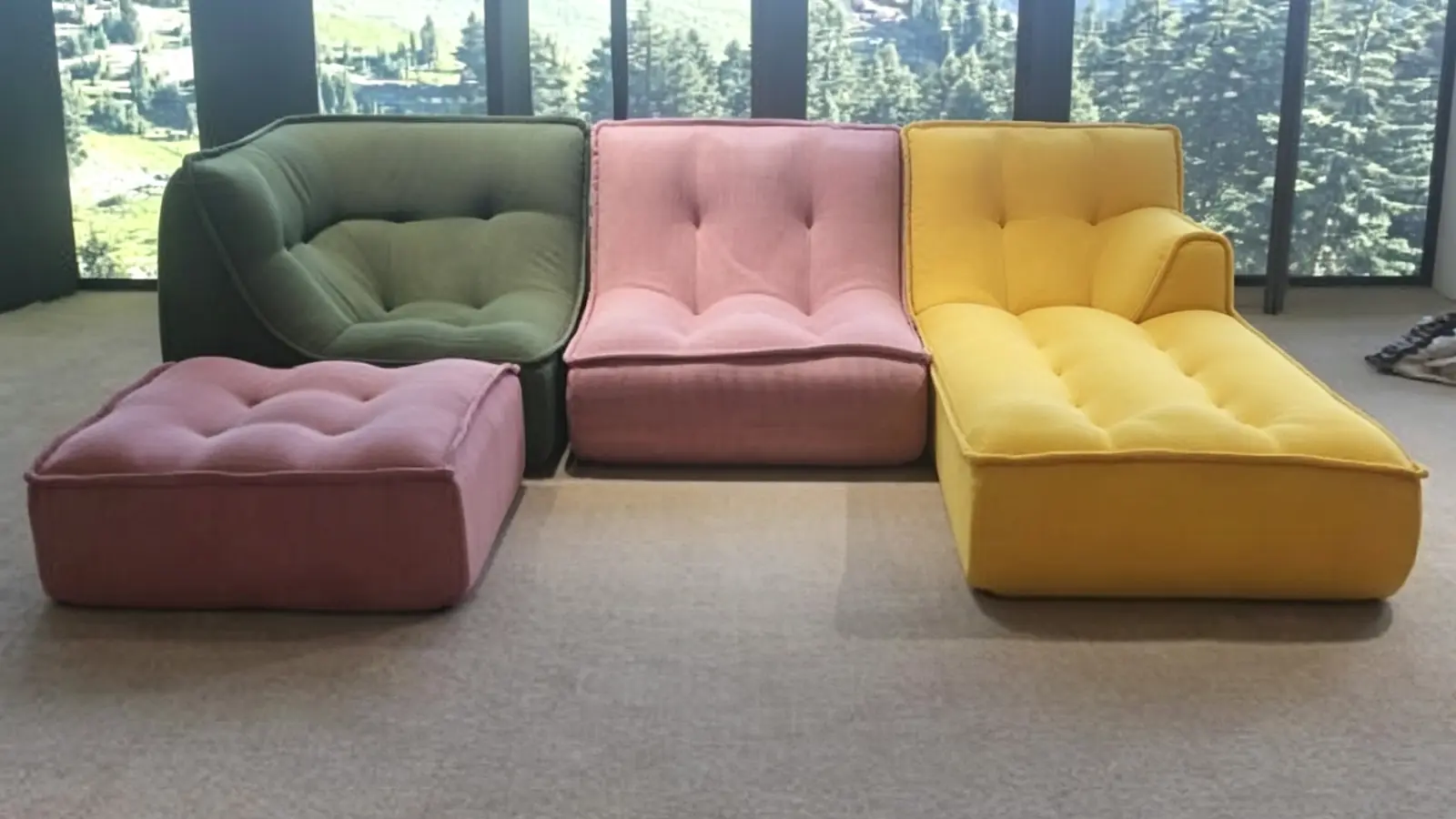
For retailers and furniture brands, the useful comparison is whether a proposed construction meets the desired seating experience and can be produced consistently. ScrapeSpace lists modular seating that combines high-density foam or memory foam with pocket springs, giving buyers concrete configurations to examine without treating unverified performance claims as test results.
What Is the Difference Between Foam and Spring Sofa Construction?
How Foam Supports a Sofa Seat
Foam compresses under a seated load and changes shape to distribute contact. Formulation, density, firmness, layer thickness and recovery characteristics are different properties. A higher-density foam does not necessarily feel harder, and the word “memory” describes a response characteristic rather than an assured service life.
How Springs Support a Sofa Seat
Springs store mechanical energy when compressed and provide a restoring force. The design, size, spacing and integration with surrounding layers affect the overall feel. Pocket springs are individually encased, but that label alone does not reveal gauge, layout or completed-seat performance. Also distinguish springs within a cushion from a sprung support foundation beneath the cushion.
Why Combination Constructions Are Common
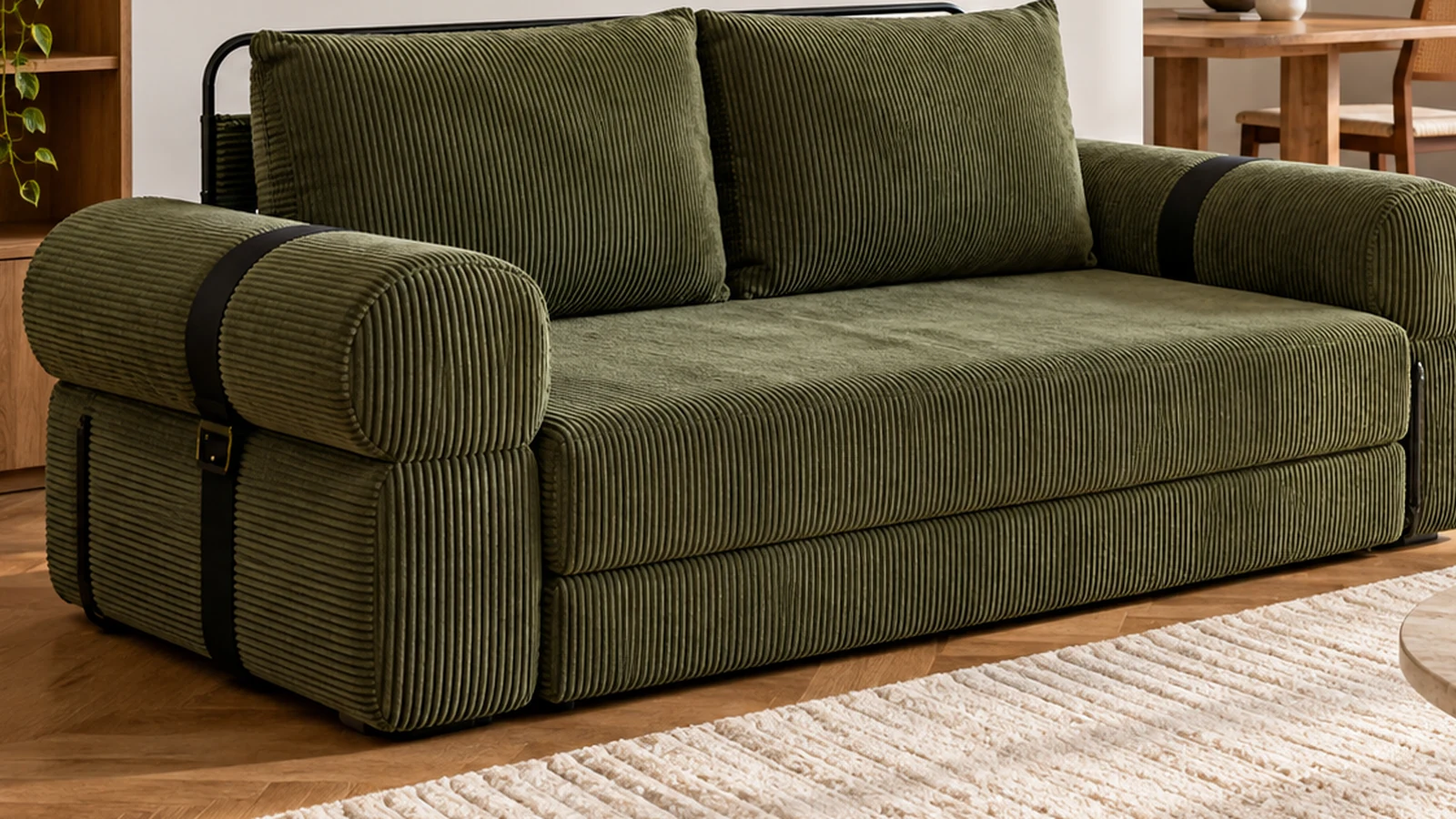
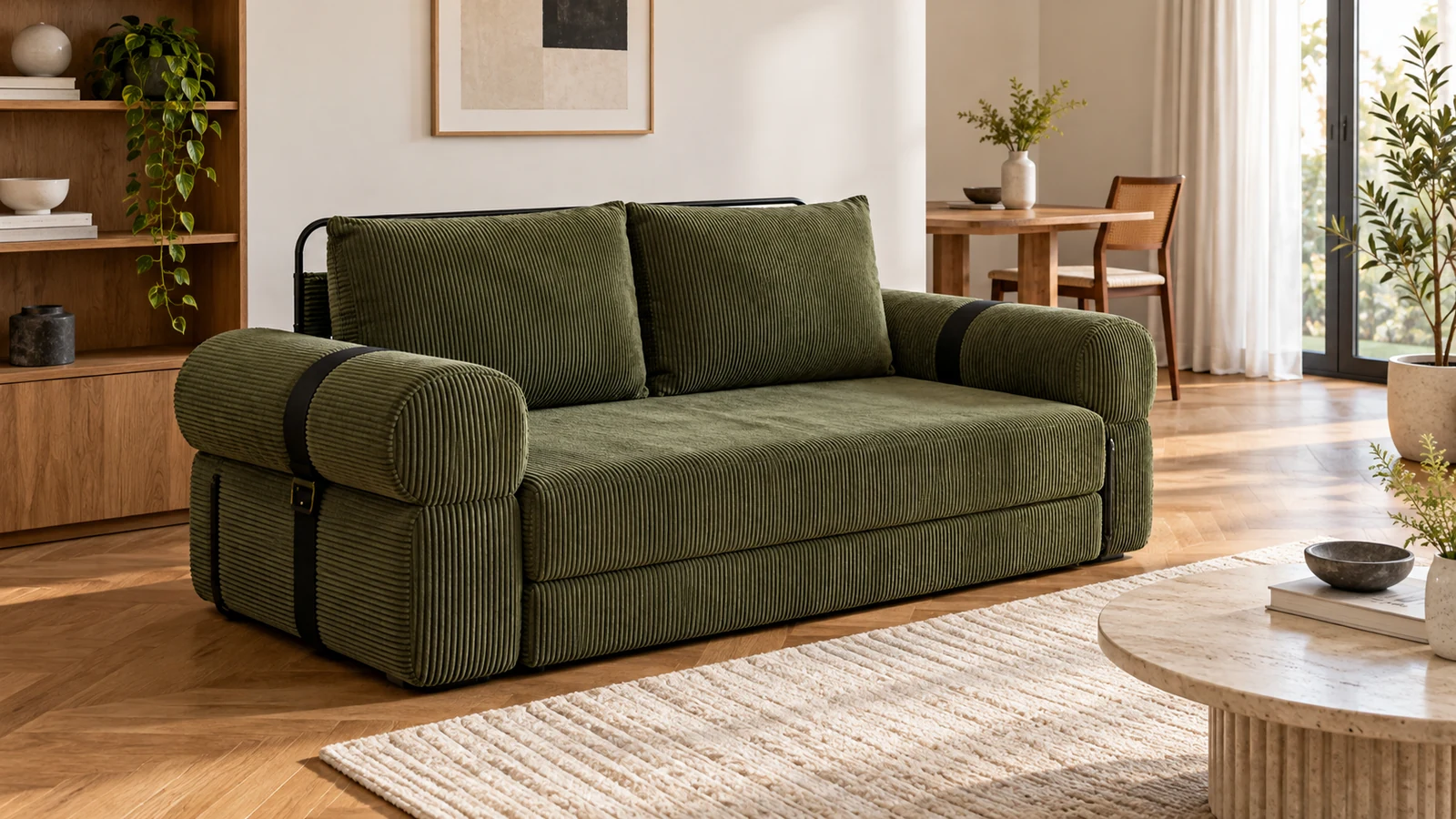
A comfort layer can soften initial contact while a deeper spring or foam structure carries part of the load. A sofa can therefore be both a foam sofa and a spring-supported sofa. ScrapeSpace describes its black sparkle velvet modular cloud couch as combining a triple-layer construction, memory foam and pocket springs; the public page does not provide a verified component-level sectional drawing.
How Do Foam and Spring Sofas Feel Different?
It is tempting to describe a foam seat as soft and a spring seat as firm. In practice, either structure may be made to feel relatively soft or supportive, because upholstery, cushion height and support geometry influence how the furniture responds. Judge the entire sample using the same seated positions and intended use.
Initial Softness and Sink-In Feel
The upper comfort layer largely influences first contact. Thick soft foam can create a deeper initial sink-in, while a thinner comfort layer over a firmer foundation may feel more immediate. Neither sensation establishes long-term durability. Buyers should document the intended seat feel in a sample approval rather than substitute subjective marketing language.
Rebound and Support During Use
Rebound describes how the seat responds after load removal. Certain foam formulations and spring systems can contribute to a more responsive feel; their actual effect depends on the assembly. Test both ordinary seated pressure and movement across the cushion, noting whether support changes abruptly at edges or module joints.
Seat Depth, Thickness and Body Position
Two seats containing similar materials can feel different if one has deeper cushions, a lower backrest or a different seat angle. Keep these variables visible in comparative evaluations; otherwise differences attributed to “foam versus springs” may come from geometry instead.
Which Construction Retains Its Shape Better?
No material name reliably predicts shape retention across every sofa. Foam can change under repeated compression and environmental conditions; spring-related components can also experience wear or faults. Performance depends on loading, construction, material quality and care. Without comparable testing, claims such as “lasts twice as long” or fixed years of useful life would be unjustified.
| Factor | Foam-focused cushion | Spring-and-foam cushion |
|---|---|---|
| Initial comfort | Depends on foam layers and firmness | Depends on comfort foam and spring support |
| Shape retention | Evaluate foam recovery and loading | Evaluate both foam and spring arrangement |
| Failure investigation | Check localized compression or deformation | Check foam as well as spring or supporting components |
| Supplier evidence | Layer specification and approved sample | Layer and spring specification plus approved sample |
If a sample shows an uneven surface, first check upholstery tension, cushion positioning, frame support and actual use conditions. A visible dip is a symptom, not proof that the foam or spring is necessarily defective.
Why Cushion Layers Matter More Than a Single Material Label
A sofa seat is a system. Upholstery affects touch and appearance, upper padding influences comfort, deeper layers support the sitter and the base transfers load into the frame or module. The contribution of each layer depends on its position and interactions with the others. A supplier’s layer diagram or bill of materials is more informative than a generic “premium spring” label.
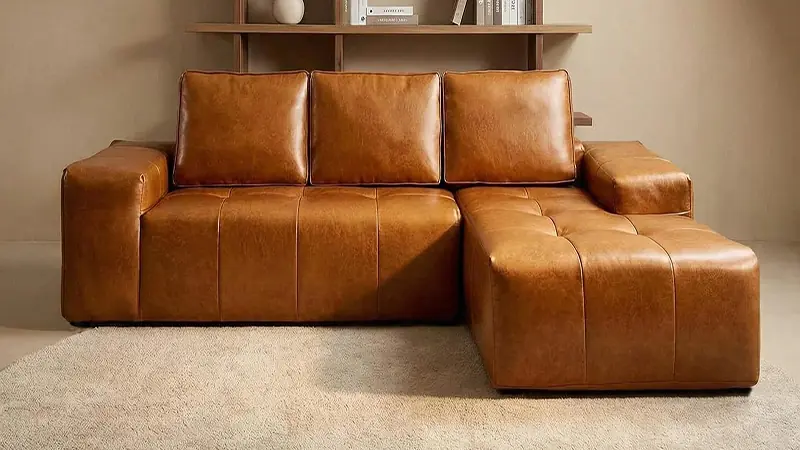
For example, ScrapeSpace’s brown faux leather modular L-sectional sofa is described as using high-density foam with a pocket spring system. It also has a wipe-clean faux-leather surface and modular units. Those are product-page descriptions for that model, not a promise that every ScrapeSpace couch has the same interior materials or liquid-resistance characteristics.
- Request material descriptions for each functional layer, not only the top cushion.
- Confirm whether support springs are in the cushion or the underlying support structure.
- Record module dimensions, seat depth and cushion thickness alongside material details.
- Use a consistent sample and product revision for approvals.
What About Foam and Springs in Vacuum-Compressed Sofas?
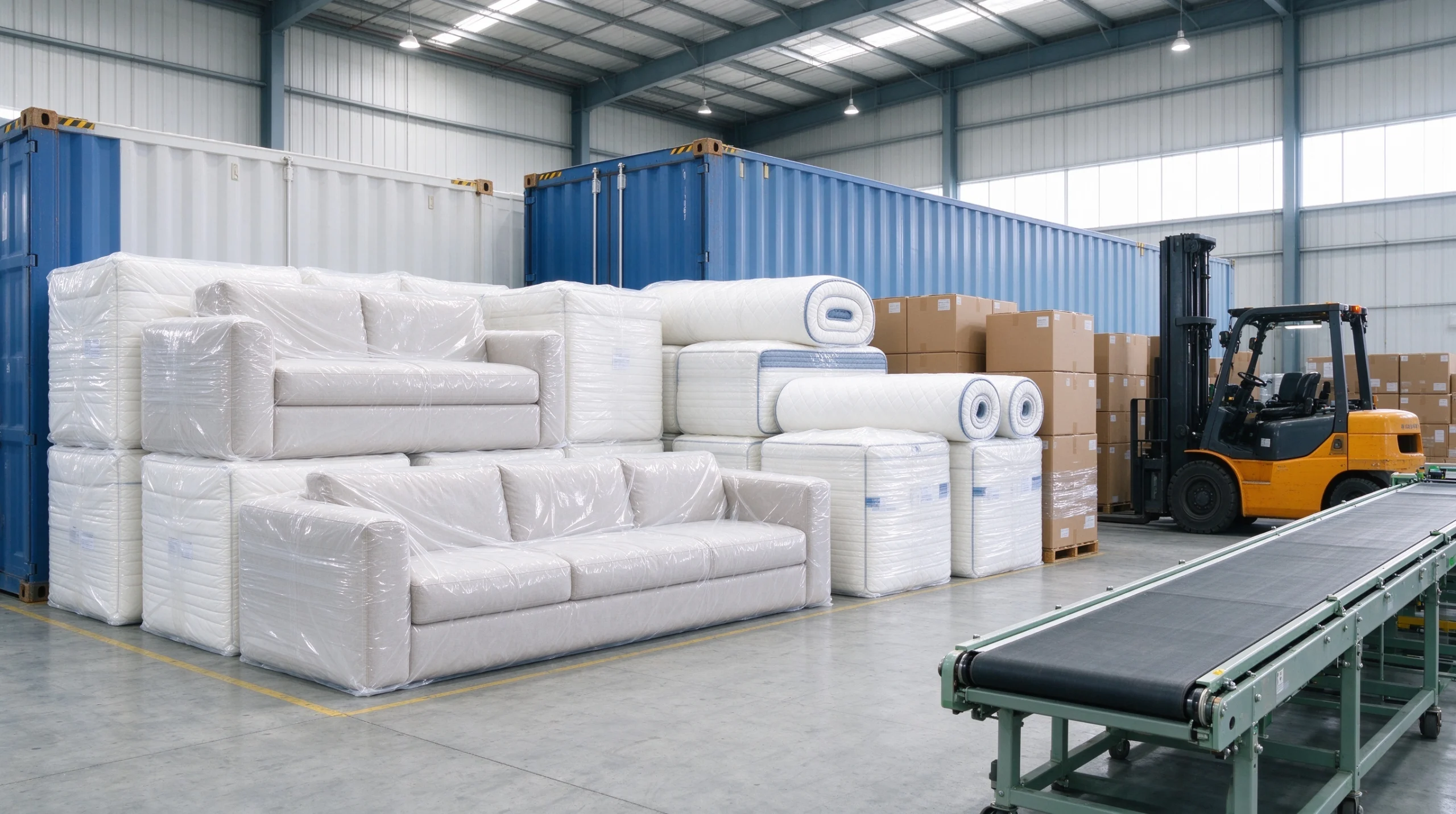
Vacuum compression adds another condition to evaluate: can the selected structure be packed and recovered according to the manufacturer’s approved process without unacceptable damage or change in function? Suitability depends on the particular construction and packaging method; it cannot be assumed from “foam” or “pocket spring” alone.
Both the black velvet and brown faux-leather modular sofas are described by ScrapeSpace as vacuum-compressed products. This supports discussion of those particular product combinations, but the public pages do not report compression-cycle validation, standardized recovery measurements or quantified freight reductions. Before approving a bulk order, request packaging instructions and sample acceptance criteria appropriate to the exact configuration.
How Should Buyers Compare Foam and Spring Sofa Specifications?
A specification-based comparison controls the variables that often distort subjective comfort judgments. Ideally, assess samples with similar seat depth, cushion thickness, upholstery and layout, then consider whether the remaining difference in support construction suits the planned market.
| Buyer check | Question to ask |
|---|---|
| Foam details | What foam types, layers and measurable specifications are supplied? |
| Spring details | Are springs present, where are they installed and what configuration is approved? |
| Seat geometry | Are seat depth, thickness and back angle comparable? |
| Sample control | Which exact sample and revision will be used as the reference? |
| Compression packing | Has the model-specific packing and recovery process been agreed? |
| Acceptance | How will appearance, construction and seat feel be assessed? |
A purchaser developing a custom collection should also record the permitted material substitutions, the method used to approve changes and whether the same cover construction is used across color options. ScrapeSpace presents configurable furniture ranges, while actual selections and order conditions require confirmation for each inquiry.
Frequently Asked Questions
Does high-density foam always feel firmer?
No. Density and firmness describe different characteristics. Foam composition and cushion design determine how the finished seat feels, so request both material details and a finished sample.
Can a sofa contain both memory foam and pocket springs?
Yes. The two materials can serve different roles in the same seat assembly. ScrapeSpace lists a black velvet modular sofa using memory foam together with pocket springs.
How can a buyer verify sofa cushion construction?
Ask for a model-specific layer description, appropriate supporting drawings or materials list, and an approved production sample. A product photograph alone cannot prove the internal structure.
Final Considerations
Choosing between foam and spring sofa designs starts with how the entire seat performs for its intended application, not a contest between labels. Compare seat geometry, material layers, sample feel, packaging suitability and documented specifications. To discuss a furniture collection, send ScrapeSpace your preferred seat feel, target dimensions, cover materials, quantities and construction requirements.