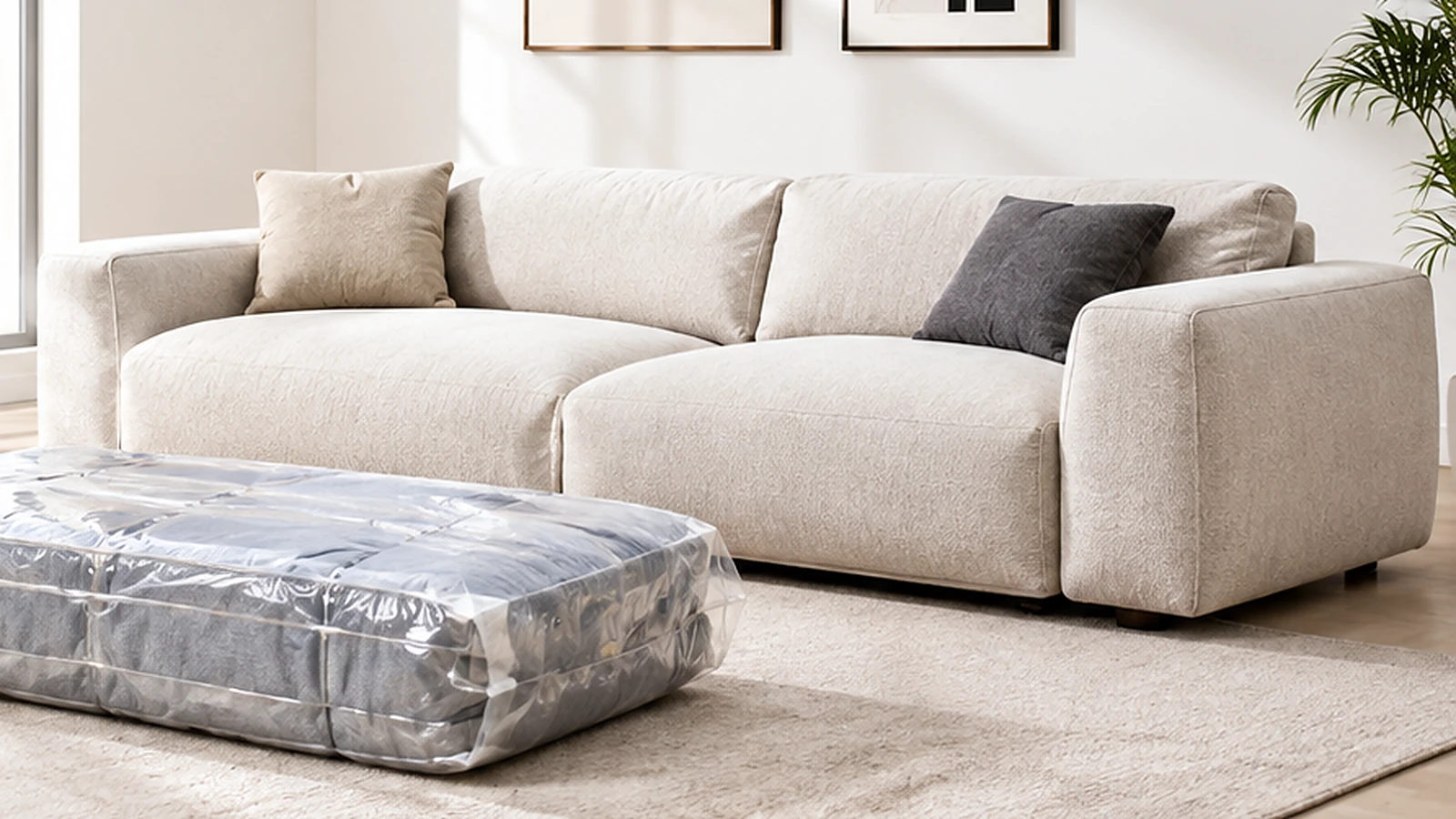
To choose a modular sofa, start with the seating you need, measure the complete configuration in your room, and assess the seat and backrest together. A layout that fits against a wall can still obstruct a doorway or leave too little usable seating. Comfort also depends on how you sit, so dimensions and cushion descriptions need to be considered alongside the actual sitting experience.
ScrapeSpace offers modular sofas with different upholstery and component arrangements. Its multi-seater sofa collection provides a starting point for comparing available designs. Narrow those options by checking the exact configuration, rather than assuming every modular sofa can be rearranged in the same way.
Start with Seating Needs and Everyday Use
Decide how many people normally use the sofa and what they do there. Upright conversation, watching television, and stretching out place different demands on the same floor area. Plan around your regular routine, then consider how you accommodate occasional guests.
If several people need to sit upright together, compare the usable seats with the back cushions in place. A corner section or chaise may occupy substantial space without serving as an equivalent extra seat. If one person regularly lounges with their legs extended, check the chaise length and its effect on access around the sofa.
A separate ottoman may offer another way to arrange a lounging position when the chosen range includes one. Check where it will sit during use and where it can go when the walkway is needed. Treating an ottoman as extra seating also requires confirmation that it is intended for that purpose.
Finally, ask how often the layout will realistically change. Frequent rearrangement makes component handling and connection details more relevant. For a sofa likely to remain in one position, the suitability of that finished layout deserves more attention than the number of theoretical combinations.
Measure the Finished Layout in Your Room
Separate Overall Dimensions from Usable Seating Space
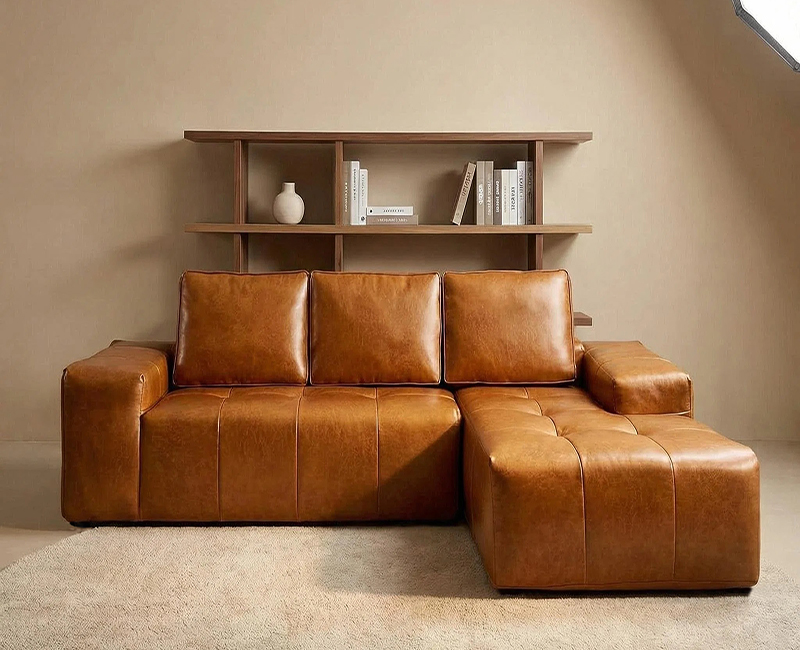
Three sets of measurements answer different questions. Overall dimensions describe the furniture’s footprint. Module dimensions describe individual components. Usable seating dimensions describe the space available once arms and back cushions are taken into account.
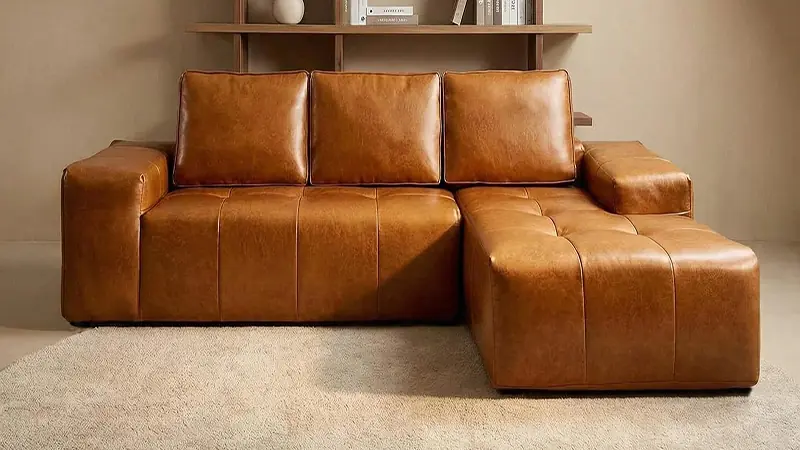
For example, ScrapeSpace’s Brown Faux Leather Modular L Sectional Sofa lists the following measurements:
| Measurement | Published dimensions | What it helps you check |
|---|---|---|
| Whole set, length × width × height | 275 × 275 × 70 cm | The overall size of the listed configuration |
| Single module, length × width × height | 85 × 85 × 70 cm | The size listed for an individual module |
| Packaging per module | 100 × 35 × 35 cm | The package to consider when planning delivery |
These figures describe different states and parts of the product. Use the complete configuration drawing to confirm the finished footprint; multiplying one module dimension by a module count is not a substitute for that drawing. Seat depth and seat height need their own measurements.
Check Walkways, Doors and Nearby Furniture
Mark the proposed footprint on the floor with removable tape or a paper template. Include the full depth of the chaise or corner section, then walk through the room as you normally would. Open doors, pull out nearby chairs, and check access to storage.
For a modular sofa in a small space, a longer arrangement along one wall may work better than a return section projecting into the main route, if the selected modules support that layout. In another room, an L-shaped modular sofa may make good use of a corner. The decision comes from the room’s doors, furniture, and movement patterns.
Keep the room plan and the product drawing side by side. This makes it easier to spot a configuration that technically fits but leaves an awkward approach to a seat or blocks a frequently used cabinet.
Match the Modules to the Layout You Need
Confirm Corner Units, Seats, Chaise Sections and Ottomans
Build a component list for the arrangement you want. It should identify the seats, corner units, arm positions, chaise sections, and any ottoman. Check the orientation on a drawing rather than relying on a photograph alone.
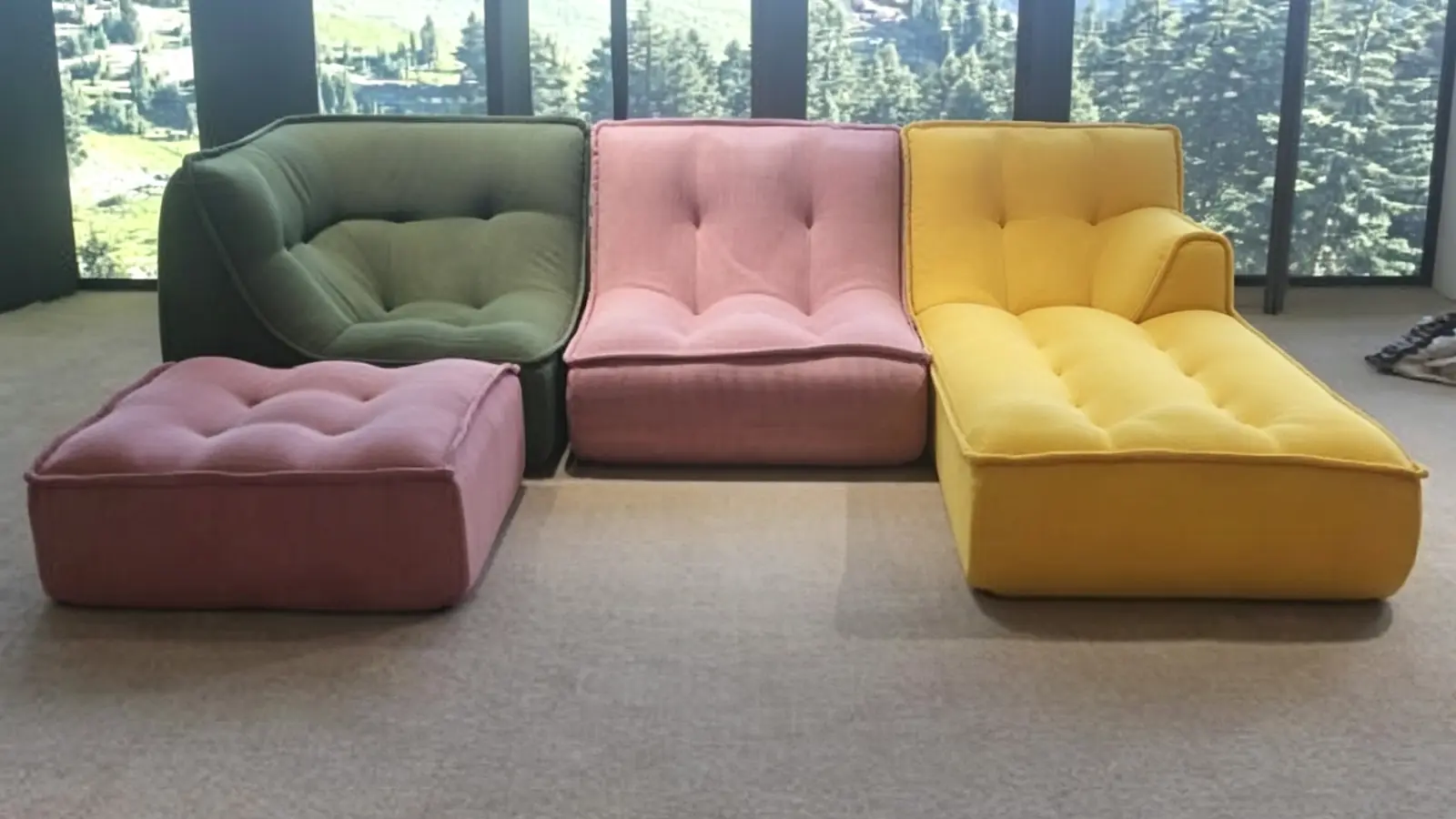
ScrapeSpace’s modular floor sofa with an ottoman includes corner, middle-seat, chaise, and footstool components. That component range gives a concrete basis for discussing a layout. The intended arrangement should still be confirmed for the selected pieces.
Pay particular attention to left- and right-facing descriptions. Establish whether the direction is defined while facing the sofa or while seated on it, and mark the required side on the order drawing. A chaise shown on one side does not establish that the same component can be moved to the other.
Check Connections and Future Additions
Ask how the modules stay together and what is involved in separating them. Identify any supplied connectors, their positions, and the instructions for assembly. If regular rearrangement matters, check the handling requirements of the individual pieces as well.
Future expansion needs a separate check. Confirm whether compatible modules can be ordered individually and whether the same upholstery remains available. Similar dimensions or a matching photograph do not establish compatibility across different sofa ranges.
Assess Comfort with the Actual Seat and Backrest
Compare Seat Depth, Back Support and Sitting Position
Assess modular sofa comfort in the position you expect to use most. Sit with the back cushions arranged as intended, then notice where your back rests, how your legs are positioned, and how easy it feels to stand up. Try a lounging position separately if that is part of your routine.
A deep-looking sofa can have less usable seat depth once thick back cushions are fitted. Conversely, a seat that suits reclining may feel too deep when you want to sit upright. Ask for usable seat depth, seat height, and the relevant backrest measurements instead of drawing conclusions from overall width, depth, and height.
If several people will share the sofa, compare their needs. One person’s preferred lounging seat may not be another person’s comfortable upright seat. When trying the sofa is not possible, request dimensions and details of the cushion construction for the exact configuration being considered.
Understand Foam Density and Firmness
Foam density measures mass per unit volume; firmness describes resistance to compression under specified conditions. A higher-density foam is not automatically a harder foam. The two properties answer different questions.
The brown modular sectional’s published construction includes pocket springs and high-density foam. That identifies elements of its construction, but it does not provide a numerical firmness rating or establish how every user will experience the seat. Compare the complete cushion and support arrangement, and ask for defined specifications when they matter to the purchase.
Choose Upholstery Around Your Care Routine
Consider how the upholstery will be used before choosing a finish. A sofa used for everyday family lounging raises different care questions from an occasionally used seating area. Look at the fabric or surface sample, its feel, and the cleaning instructions together.
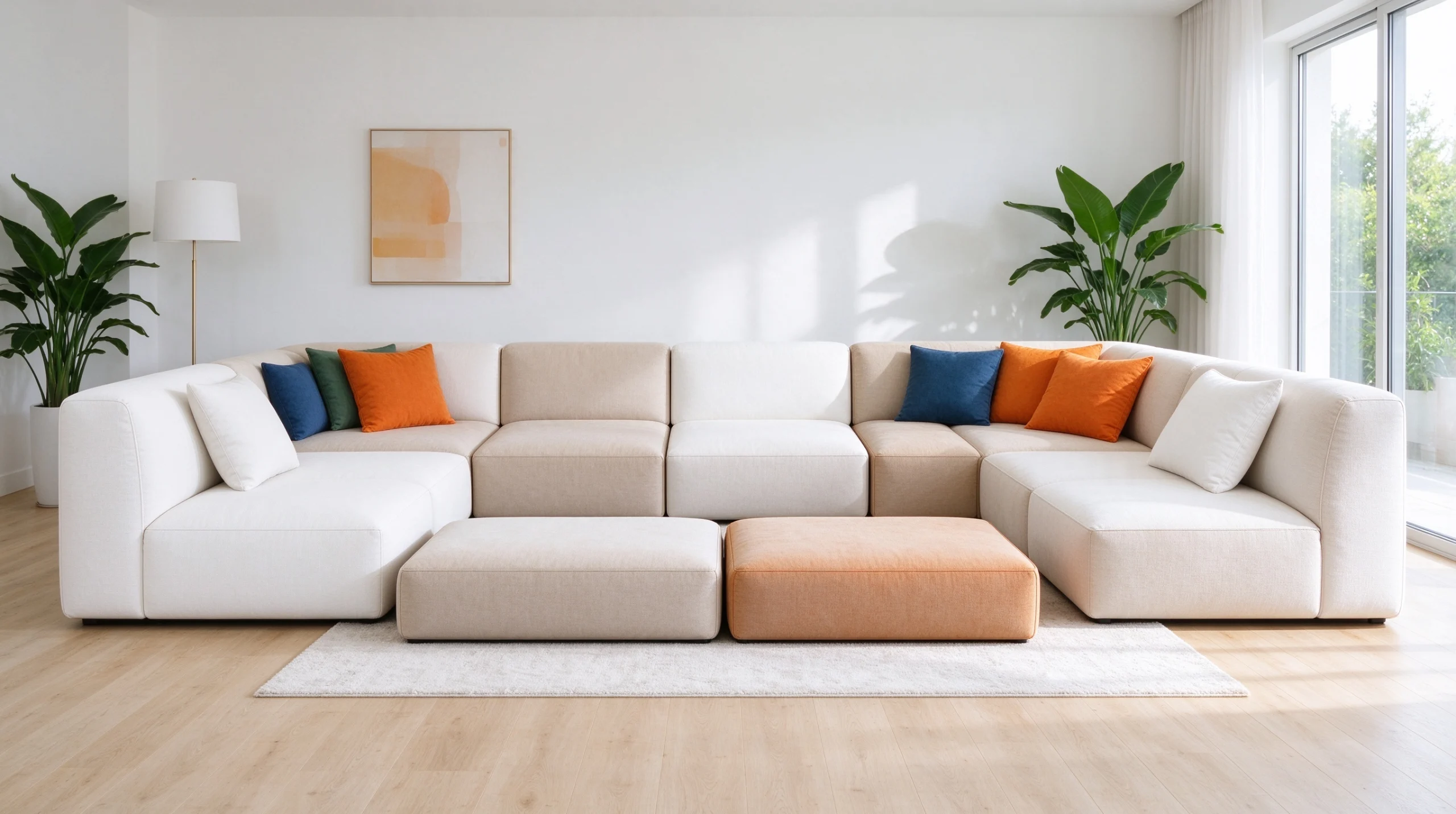
ScrapeSpace’s White Modular L Shaped Sofa combines fabric upholstery with separate back cushions. When evaluating that type of design, check both the surface-care method and which parts are intended to be moved or removed.
Removable, washable, and suitable for spot cleaning are separate descriptions. A loose cushion does not necessarily have a washable cover, and a zipper does not establish that the cover is designed for routine removal. If easy everyday upkeep is a priority, ask for the care instructions for the selected upholstery before deciding.
Check Delivery Fit and What the Price Includes
Compare Packed Size with Finished Size
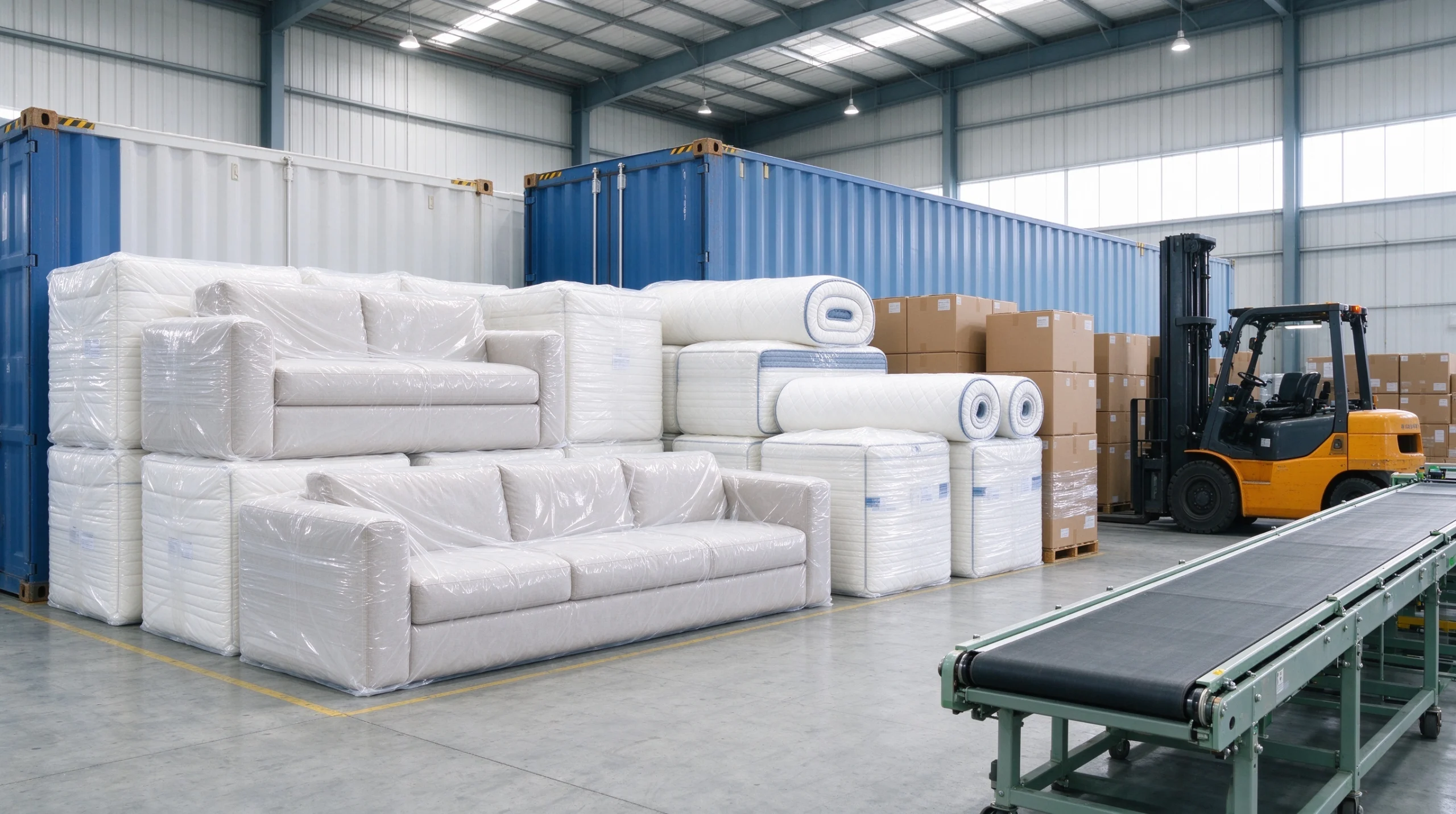
Once the layout works in the room, check the route into it. Compare package dimensions with the doorway opening, hallway turns, stairwell clearance, and elevator interior where relevant. A package that fits through the entrance may still be difficult to turn at the next landing.
The white modular sofa lists five packages measuring 112 × 35 × 35 cm each, while its finished dimensions are 275 × 275 × 78 cm. Keep the two sets of figures separate when arranging delivery and planning the room.
For a compressed sofa, also confirm where the packages should be opened and what setup instructions apply. Plan around the selected model’s guidance rather than assuming that every compressed sofa needs the same unpacking process or recovery time.
Compare the Same Configuration
Before comparing prices, make sure each quotation covers the same seating arrangement and upholstery. Check whether the required arms, ottoman, back cushions, connectors, and other listed components are included. Then clarify which delivery or assembly arrangements are included in the offer.
A lower total for fewer modules answers a different purchasing question. A clear component list makes the comparison useful and reduces the chance of discovering an omitted part when the sofa arrives.
Use a Final Checklist to Narrow Your Options
A useful modular sofa buying checklist should bring the room plan, configuration, and care requirements together. Before making the final choice, confirm:
- The seating accommodates your normal users and preferred sitting positions.
- The complete layout fits while preserving the routes and access the room needs.
- The module list, orientation, and connection method are clear.
- The usable seat dimensions and cushion construction suit the way you plan to sit.
- The selected upholstery has care requirements you can manage.
- The packages can reach the room and the quotation includes the intended components.
For retailers, designers, and other furniture buyers discussing a configuration with ScrapeSpace, bring the room or project dimensions, preferred layout, upholstery choice, and required quantity. You can discuss your sofa configuration and material requirements with those details in hand. They provide a practical basis for checking which product arrangement matches the intended use.